Kronenberger Rosenfeld defends lawsuits under the California Invasion of Privacy Act (“CIPA”), at California Penal Code Section 630, et seq. Our firm provides a decisive and clear path forward for businesses seeking CIPA litigation defense or guidance on website compliance.
Kronenberger Rosenfeld is at the forefront of CIPA litigation defense, helping businesses across the country. If you have received a CIPA violation or demand letter, contact our team for a free consultation today.
What is CIPA?
The California Invasion of Privacy Act (CIPA), Cal. Penal Code §631 et seq., passed in 1967, was meant to criminalize eavesdropping on telephone calls. However, recent cases revolve around alleged wiretapping via illegal "trap and trace", often based on a defendant's use of a third-party marketing pixels, cookies, or web beacons.
What is "trap and trace"?
Under California’s Invasion of Privacy Act (CIPA), a “trap and trace device” is any device or process that captures incoming electronic signals to identify the source of a communication without recording the content itself. Trap and Trace has been repurposed to include tracking tools that log device identifiers, IP addresses, URLs, and similar metadata. The tools most commonly named in CIPA tracking pixel complaints include:
Meta Pixel (Facebook or Instagram Pixel) - Sends IP address, device information, URL paths, and event data to Meta, sometimes tied to user identifiers or emails via Advanced Matching functions.
Google Analytics - Logs IP address, device/browser details, page paths, and referrers that can identify the source and path of a communication.
Microsoft Bing Ads / UET and Microsoft Clarity - Tracks session behavior, clicks, page flows, and replay sessions, which plaintiffs characterize as capturing routing and signaling information about user interactions.
LinkedIn Insight Tag (LinkedIn Pixel) - Sends visitor and page-level metadata to LinkedIn for retargeting and audience building.
Does CIPA apply to my business?
CIPA pixel lawsuits can impact any business that interacts with California residents. If California users use your website, app, or phone lines, you can face CIPA claims. California State privacy laws can apply to out-of-state businesses because they focus on protecting California residents regardless of the business’s location.
CIPA Violations
CIPA is a powerful statute for plaintiffs because it provides for statutory damages of $5,000 per violation, which can create massive financial risks for defendants. Generally, a business will first be notified of a CIPA violation when they receive a demand letter or notice of litigation from a plaintiff's firm, outlining the claims and demands.
CIPA lawsuits and arbitration complaints generally focus on a few main arguments. Specifically, plaintiffs argue that website tracking technologies are analogized to unlawful "pen registers" or "trap-and-trace" devices. Technologies used on websites (cookies or tracking pixels) capture information, like IP addresses, when users visit the site. That information can be sent to third-party platforms, like LinkedIn, TikTok, and Google. Plaintiffs argue that this collection and sending of information without consent to third parties is similar to the use of a pen register or trap-and-trace device, and which would be a violation of CIPA.
Respond to a CIPA Demand Letter
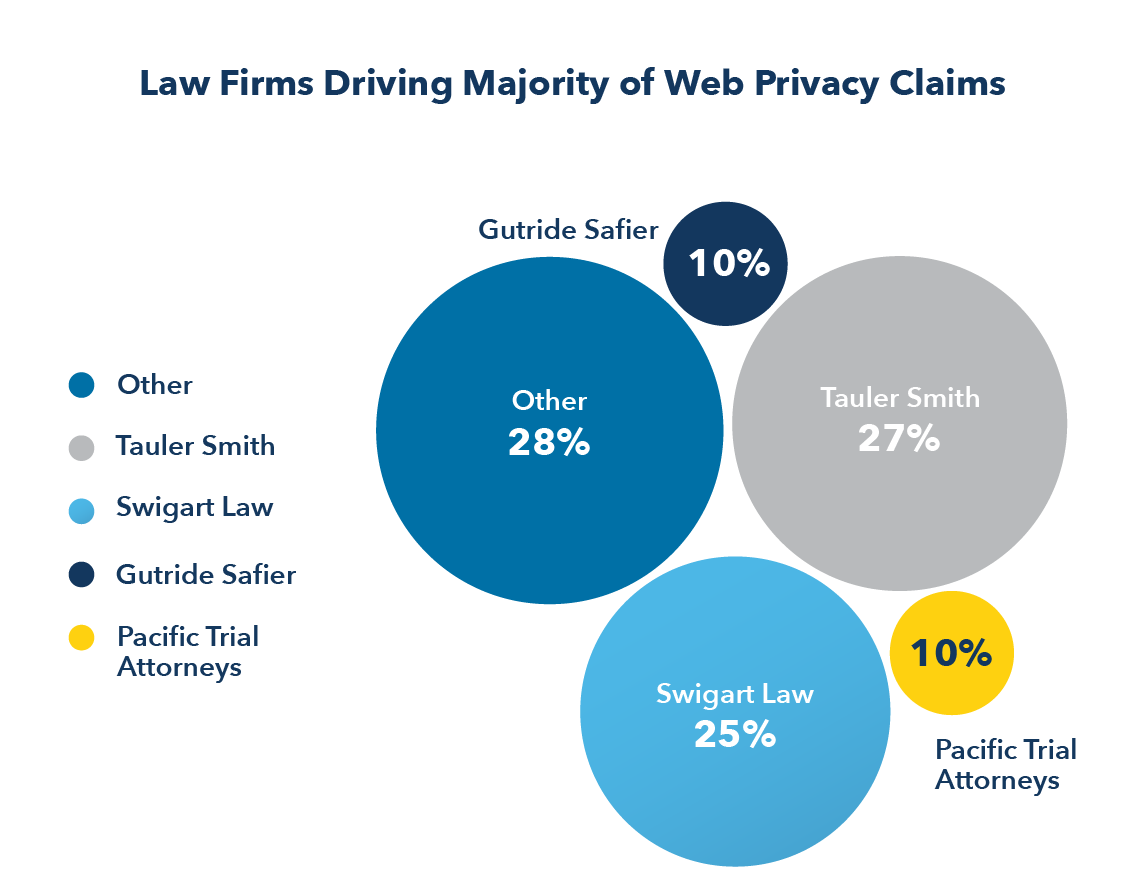
Our firm vigorously defends CIPA claims on behalf of our defendant clients, in both courts and in arbitration. Specifically, we have significant experience responding to demand letters from Tauler Smith and Swigart Law Firm. If you have been named in a lawsuit or arbitration, or if you have received a demand letter alleging California Privacy violations, we would be happy to discuss how we could help.
Rise in CIPA Litigation
The California Consumer Privacy Act ("CCPA") and California Privacy Rights Act ("CPRA") does not allow for individual consumers to sue for damages. This has led plaintiff's attorneys to repurpose the decades old CIPA law to address privacy violations, in response to rampant use of marketing pixels and cookies that pass private information of website users to third parties such as Google or Meta (i.e. Facebook).
While some courts have been skeptical about the merits of these arguments, other courts have refused to quickly dismiss cases. As these cases work their way through state and federal courts, there are strong arguments that defendants can assert at any stage. Contact us today for a free consultation.
How to Respond to a CIPA Tracking Pixel Demand Letter
May 27, 2026
This is an excerpt from The Essential Guide to CIPA. Written by Kronenberger Rosenfeld's experienced privacy attorneys, this guide covers what businesses need to know about the California Invasion of...
Resources
FTC Targets “Made in USA” Claims Following White House Executive Order
April 27, 2026
“Made in USA” claims have been targeted by regulators for years, and recent federal announcements indicate continued regulatory scrutiny in this area. Federal Scrutiny On March 13, 2026, the White...
News
VOGUE v. DOGUE, Jack Daniels and the Newest Edition of Parody Trademark Litigation
April 15, 2026
When does a parody cross the line into trademark infringement? In Condé Nast’s Vogue v. Dogue lawsuit, the publisher of VOGUE claims a dog‑themed fashion magazine called DOGUE goes too...
News
Motion to Quash an Out-Of-State Subpoena in California
April 7, 2026
Protection from foreign subpoenas When an out-of-state or foreign subpoena targets a California person, business, or tech platform, the key protection tool is a motion to quash. This allows California...
Resources
Domesticate a Subpoena in California
February 25, 2026
How the UIDDA works with California’s Interstate and International Depositions and Discovery Act The Uniform Interstate Depositions and Discovery Act (UIDDA) is a model law that simplifies the acquisition of...
Resources
IP Lessons from Twitter: Avoid Trademark Cancellation through Bona Fide Use
December 9, 2025
The value of a trademark may outlast the commercial phase it was born in – but if a company stops using its marks in genuine, ongoing commerce, its registrations can...
Resources
Categories
Try typing keywords like FTC, Advertising, Trademark, etc...