VOGUE v. DOGUE, Jack Daniels and the Newest Edition of Parody Trademark Litigation

When does a parody cross the line into trademark infringement? In Condé Nast’s Vogue v. Dogue lawsuit, the publisher of VOGUE claims a dog‑themed fashion magazine called DOGUE goes too far.
In late 2025, Advance Magazine Publishers, Inc., better known as Conde Nast, filed a complaint against Tasty Work, LLC. One of Conde Nast’s flagship publications is the well-known VOGUE magazine, and this lawsuit is brought against the company that publishes DOGUE magazine, described in the complaint as a “periodical focusing on dogs, dog fashion, and celebrity dog owners.” Conde Nast is asserting federal claims for trademark infringement, false designation of origin, and dilution of the famous VOGUE mark, along with unfair competition claims.
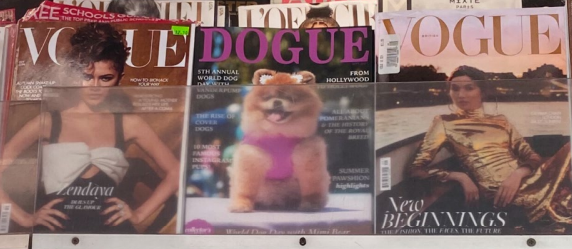
Recently, Tasty Work has responded by attempting to turn the tables on Conde Nast, instead claiming the case “presents a clear instance of reverse confusion, not traditional trademark infringement.” They assert a variety of defenses and counterclaims, bolstering their First Amendment protections with claims that the VOGUE mark is actually weak and descriptive, so there is no likelihood of confusion between DOGUE and VOGUE, and that, actually, Conde Nast is infringing Tasty Work’s DOGUE mark and creating reverse confusion.
If any of this rings a bell, particularly regarding the intersection of parody and trademark law, then you’re right. This case is reminiscent of the Jack Daniel's v. VIP Products case decided by the Supreme Court in 2022, a case that presented the issue of how parody can intersect with trademark rights under the Federal Lanham Act in the context of dog toys shaped like the brand’s distinctive Jack Daniels’ bottle. Conde Nast’s lawsuit against Tasty Work, LLC for the canine-themed, high-fashion DOGUE publication raises that intersection once again.
Jack Daniel's v. VIP Products
In Jack Daniel’s v. VIP Products, the Supreme Court held that when a parody uses a mark as a source identifier on commercial goods, traditional likelihood‑of‑confusion rules apply instead of special First Amendment shields. Then, VIP’s dog toy that mimicked the Jack Daniel’s bottle—with slogans like “Bad Spaniels”—was analyzed under standard trademark infringement and dilution principles.
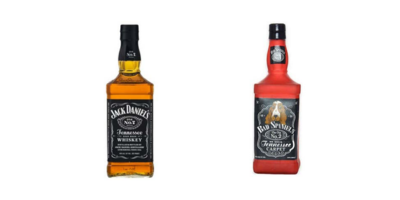
The Supreme Court’s ruling in Jack Daniel’s v. VIP Products makes clear that parody is not a free‑pass defense when the junior user is using the mark to brand its own products. Instead, the claim should be analyzed under the traditional multi-factor likelihood-of-confusion test.
The Court likewise rejected a broad “noncommercial use” or parody carveout for dilution when the junior user is using the famous mark to brand its own commercial product, tightening the space where parody can automatically defeat dilution claims.
Condé Nast Vogue v. Dogue
The pending lawsuit regarding DOGUE has real echoes to the Jack Daneil’s case in that it alleges the DOGUE mark and magazine were deliberately crafted “in the style of Vogue,” including a stylized DOGUE masthead that closely mimics the iconic VOGUE logo and cover layout. The Conde Nast complaint includes images of DOGUE next to VOGUE on newsstands in an effort to demonstrate the similarities visually.
Condé Nast alleges that Dogue’s use of DOGUE as the magazine’s title, as a logo for dog apparel, and as a brand in digital media, is likely to cause confusion as to the magazine’s source, sponsorship, and affiliation. The complaint further points to the marketing for DOGUE, which Conde Nast claims is designed to trade on the brand awareness Vogue accumulated over a century. The complaint goes on to highlight Dogue’s own marketing phrases, such as “created in the style of Vogue” and “the world’s first dog fashion magazine, inspired by Vogue.”
How is VOGUE v. DOGUE similar to Jack Daniel’s v. VIP Products?
One of the core questions in the case involving VOGUE and DOGUE harkens back to Jack Daniel’s: can a defendant both parody and mimic a brand at the same time, and if so, how much First Amendment protection exists? To put it in the frame Justice Kagan used in Jack Daniel’s, “to succeed, the parody must . . . create contrasts, so that its message of ridicule or pointed humor comes clear. And once that is done (if that is done), a parody is not often likely to create confusion.”
Condé Nast’s complaint appears to have the Jack Daniel’s decision in mind, in emphasizing that DOGUE is being used as the name and logo of a commercial magazine, supported by merchandise, advertising sales, and a trademark application for printed magazines; in other words, as a source identifier. It appears that the Conde Nast complaint is trying to avoid First Amendment analysis of DOGUE as a work of parody and keep the analysis squarely within trademark law and on the issue of likelihood of confusion.
Parody Branding and Intellectual Property Law
For media and fashion brands, the Conde Nast case indicates that the risks associated with playful riffs on famous marks can still be a live issue. Using a famous magazine’s branding to name your own publication, placing that publication literally next to the famous title on newsstands, and promoting it as “inspired by” and “in the style of” the original may invite the full weight of trademark and dilution scrutiny.
At the same time, creators of parody content still have room to operate when the use of the mark is clearly referential, non-source-identifying, and does not function as the brand under which their own goods or services are sold. Occasionally brands or artists will get permission to include protected works in their art. In other words, it is still a challenge to calibrate humor, homage, and distance properly so that a playful nod to protected IP does not look like an attempt to ride the coattails of the brand in a way that triggers Lanham Act liability.
Parody Trademark Litigation
For companies or individuals facing lookalike products or publications, Jack Daniel’s gives trademark owners a clearer roadmap to push back against parody branding in federal intellectual property litigation. Trademark infringement complaints in these situations benefit from highlighting how alleged parodies function as marks in commerce, marshalling examples of intent to associate with the senior brand, and framing dilution claims around the blurring of highly distinctive, bona fide trademarks like VOGUE.
Parody Trademark Defense
Entities or individuals building businesses around parody branding will need to work more closely with an intellectual property attorney to structure that branding==including any competing trademarks, product packaging, and marketing statements—in ways that preserves genuine expressive distance from the original protected mark. Some considerations would be:
- Avoid near-identical stylization
- Steer clear of descriptions like “created in the style of [famous mark],”
- Maintain (and document if possible) clear artistic rationales for uses or references an existing brand or mark
Our firm represents media, fashion, and technology companies in U.S. federal trademark and copyright litigation, including disputes over parody branding and look‑alike products. If you are considering a parody magazine, apparel line, or brand that riffs on a famous mark, speak with an intellectual property attorney at Kronenberger Rosenfeld, LLP before launching to evaluate infringement and dilution risk under the Lanham Act.
FAQs
What specific factors will courts look at to decide whether a parody brand is likely to confuse consumers?
Courts apply standard likelihood of confusion factors and treat parody as one contextual consideration. Key factors include: the similarity of the marks; the strength of the senior mark; how similar the parties’ goods, services, and marketing channels are; evidence of actual confusion; and the junior user’s intent.
How will the Supreme Court’s Jack Daniel’s decision impact the Conde Nast lawsuit?
Parody based on an existing mark or branding is alive and well, but legal pitfalls still exist, even after the Jack Daniel’s decision. Specifically, the Condé Nast complaint shows that a brand like VOGUE, particularly with deep pockets, may still pursue litigation against a party attempting to riff or parody off of its branding or mark.
What legal considerations should a parody brand consider?
A parody brand has potential legal defenses and counterclaims it can assert in the face of litigation. To avoid that altogether, a parody mark should consider ways to distinguish its parody mark or branding while maintaining the artistic expression that is central to the parody brand. Put simply, if a parody brand or mark is a source identifier, it’s important that the consumers can see the joke and not be confused about the parody being a new “version” of another brand. Enough visual and conceptual distance needs to be present so that there is little realistic chance that consumers will think the parody comes from, or is endorsed by, the original trademark owner.
This entry was posted on Wednesday, April 15, 2026 and is filed under News, Internet Law News.