IP Lessons from Twitter: Avoid Trademark Cancellation through Bona Fide Use

The value of a trademark may outlast the commercial phase it was born in – but if a company stops using its marks in genuine, ongoing commerce, its registrations can become vulnerable to cancellation.
The Twitter / X Rebranding Trademark Dispute
One of Elon Musk’s first major acts as Twitter CEO was to rebranded as X, shift the main domain to x.com, drop the blue bird logo, and remove core “Twitter” and “tweet” branding across the platform.
Now, a US startup called Operation Bluebird has filed a petition arguing Elon has effectively abandoned the iconic brand, making their move to reclaim the TWITTER trademarks legitimate.
This high-profile clash highlights “bona fide use” and demonstrates how a bold rebrand can be weaponized as trademark abandonment in intellectual property litigation.
Commentators have noted that if X Corp truly no longer uses the Twitter marks in commerce, it may face serious hurdles defending those registrations against cancellation. At the same time, even if cancellation occurs, X could still try to oppose the challenger’s use on other grounds, showing how messy trademark “life after abandonment” can be.
Understanding Bona Fide Use in US Trademark Law
Bona fide use is the cornerstone of keeping a US trademark registration alive and out of danger in cancellation proceedings. In simple terms, the law rewards brands that genuinely use their marks in real commerce, unlike those that just park them on paper.
What Does “Bona Fide Use in Commerce” Mean?
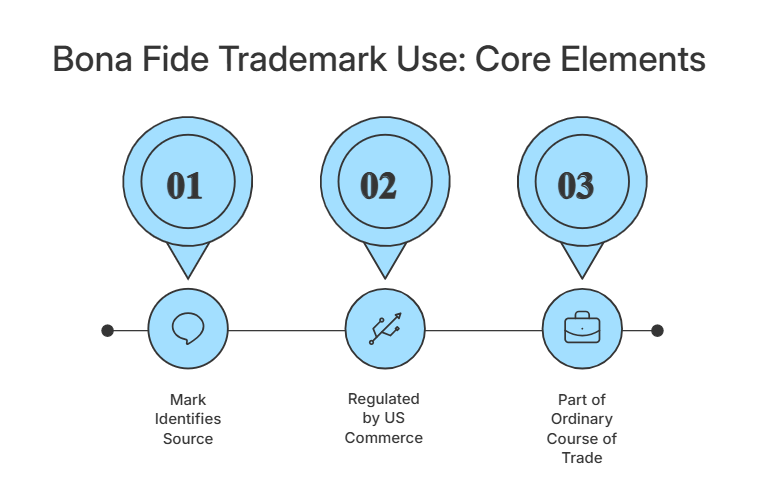
Bona fide trademark use has three core elements: the mark must act as a source identifier, the use must be in US commerce that Congress can regulate, and the activity must be part of the ordinary course of trade, not a one-off stunt. For goods, that usually means the mark appears on labels, packaging, or point-of-sale displays when products are sold or transported; for services, it means the mark appears in advertising or during the actual rendering of services to paying customers.
If a company slaps a mark on a website where nothing can be bought, ordered, or actually used, that is usually not enough. Likewise, only decorative or ornamental use (like a slogan splashed across a T-shirt front with no brand indication on tags or labels) often fails as bona fide trademark use.
When is a trademark considered abandoned?
Under the Lanham Act, a mark is considered abandoned when its use has been discontinued with an intent not to resume, and that intent can be inferred from the circumstances. Three consecutive years of nonuse create prima facie evidence of abandonment, shifting the burden to the registrant to show either use or excusable nonuse with intent to resume.
Interestingly, nearly three years of nonuse may still not be enough to cancel a mark if the owner has credible evidence of active plans to resume use. Courts and the TTAB look for things like production steps, supplier contracts, redesign work, or regulatory delays to decide whether a break is temporary or effectively permanent.
Bona Fide Use vs. Token Use: Key Differences
Bona fide use is about genuine marketplace activity: real customers, real sales or service deliveries, and commercial efforts that make sense in the industry. For example, a software company with paying subscribers using a branded SaaS platform, backed by advertising and online ordering, is typically on solid ground.
Token use is the opposite: one or two contrived sales to friends, insiders, or related entities, made solely to “keep the registration alive” without meaningful market presence. The TTAB is quick to disregard sham transactions, sporadic shipments with no followup, or websites that never lead to actual purchases or rendered services.
Excusable Nonuse and Intent to Resume
Even when actual use pauses, a registration can survive if the nonuse is excusable and the owner maintains a genuine intent to resume in a reasonably foreseeable time. Examples include supply-chain disruptions, regulatory shutdowns, major redesigns, or market withdrawals to fix safety or compliance issues.
Excusable nonuse is not a free pass for procrastination: simple lack of interest, indefinite “maybe someday” plans, or vague hopes to restart later typically fail. Owners should document the cause of nonuse and the steps taken to come back to market, such as new supplier contracts, R&D, or rebranding plans. A bold rebrand can be weaponized as trademark abandonment in intellectual property litigation.
How to Avoid Cancellation for Nonuse or Abandonment
Owners that want to sleep at night need a proactive, evidence driven approach to bona fide use. Consider the following strategies:
- Map actual use to key statutory dates (filing, allegations of use, three- year nonuse windows) for each good and service.
- Maintain specimens and transactional documents showing real sales or services under the mark, not just promotional fluff.
- Avoid “defensive” or purely token filings; make sure every listed item reflects genuine or imminent marketplace plans.
- Periodically audit the identification of goods and services, deleting items where you cannot substantiate bona fide use.
- If a temporary pause is unavoidable, document excusable nonuse and concrete steps to resume as soon as reasonably possible.
By treating the trademark as a living business asset rather than a static registration, owners significantly improve their odds of surviving TTAB challenges.
Bona Fide Trademark Usage Online
For digital products and online services, the same bona fide standards apply, but the evidence looks different. Download pages, app store listings, login screens, dashboards, subscription flows, and analytics showing active users can all demonstrate that a mark is being used in commerce in the ordinary course of trade.
However, a static “coming soon” site or a landing page with no real functionality or commercial availability generally does not qualify. Online platforms should be ready to show that US consumers can actually access the service, sign up, and use it under the branded mark.
Key Takeaways for Brands
At its core, bona fide use is about matching paperwork to reality: the registration should mirror what the business is truly offering in the marketplace. When that alignment exists and is well documented, nonuse or abandonment-based cancellation becomes much harder for challengers to win.
The unfolding Twitter/X dispute underscores that even iconic marks can be vulnerable if their owners decisively pivot away from them without maintaining genuine, ongoing use. In a “use it or lose it” system, consistent, well-evidenced trademark use is the best shield against cancellation.
To speak with a trademark attorney, contact our team today.
FAQs
- What is considered “use in commerce” for a US trademark?
Use in commerce means the mark is used on or with goods that are sold or transported in commerce that Congress can regulate, or on or with services that are actually rendered to customers in such commerce, with all use being bona fide and not a mere reservation of rights.
- Can a single sale be enough to show bona fide use?
A single genuine sale might help in some low-volume industries, but a lone, contrived sale to a friend or affiliate usually looks like token use and is unlikely to satisfy the “ordinary course” standard.
- How long can I stop using a mark before it is abandoned?
Three consecutive years of nonuse create a presumption of abandonment, but even shorter gaps can be risky if there is strong evidence of an intent not to resume, or if you lack credible proof of excusable nonuse and plans to restart.
- What kind of evidence should I keep to defend against cancellation?
Keep labels, packaging, web screenshots with ordering or signup capability, invoices, shipping records, sales reports, advertising materials, and internal records that connect the mark to real commercial activity.
- Does rebranding automatically abandon my old trademark?
Not automatically, but if the old mark stops being used in commerce and the owner has no genuine, documented intent to resume, challengers may be able to claim abandonment and seek cancellation, as seen in the dispute over the former Twitter marks.
This entry was posted on Tuesday, December 09, 2025 and is filed under Resources, Internet Law News.